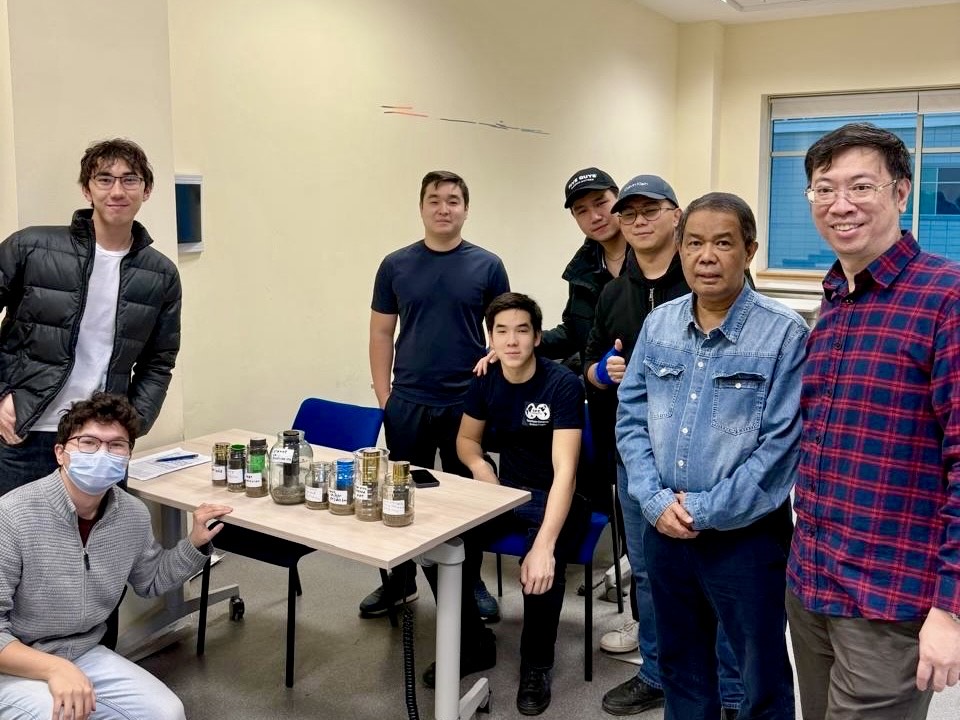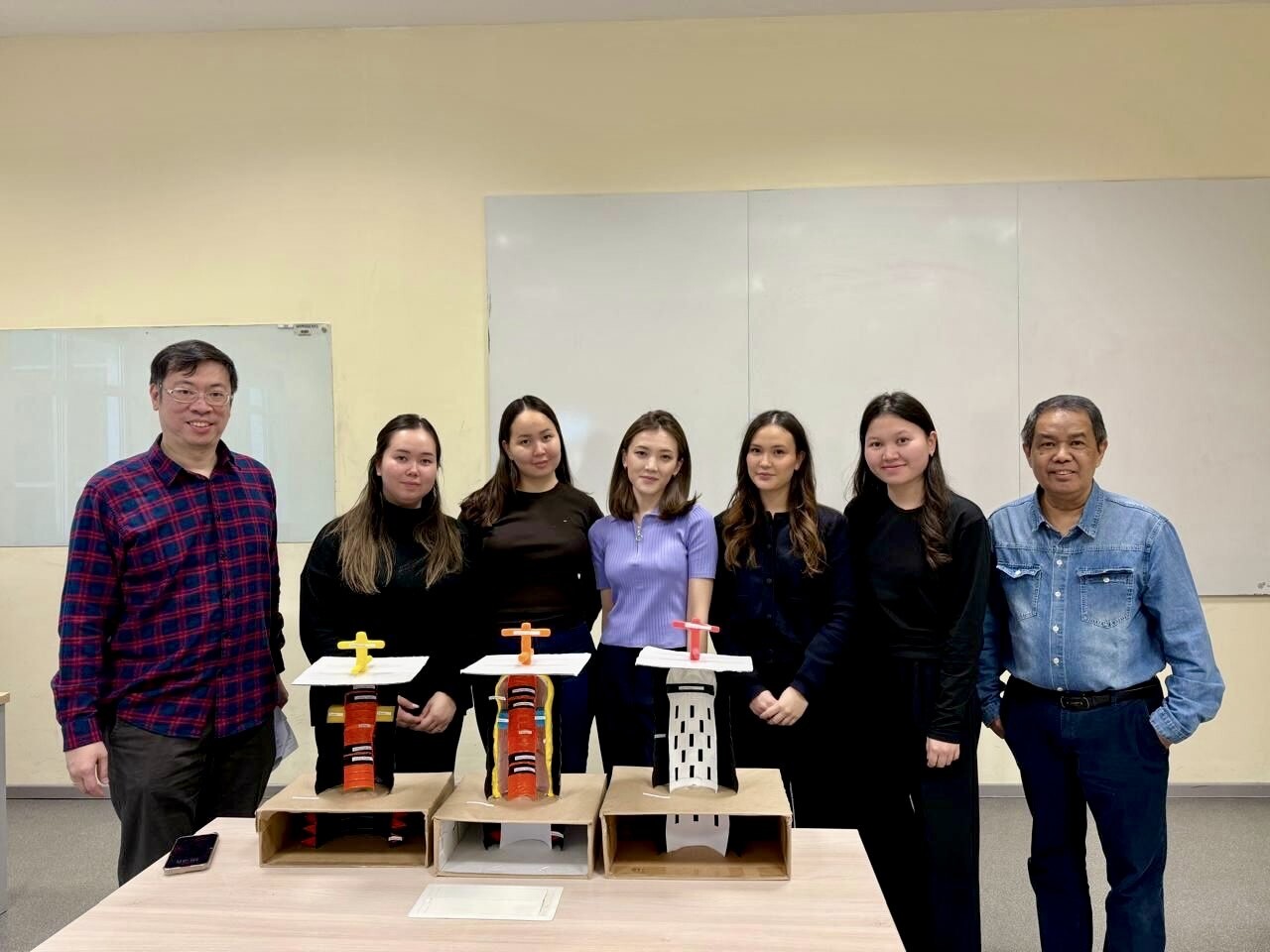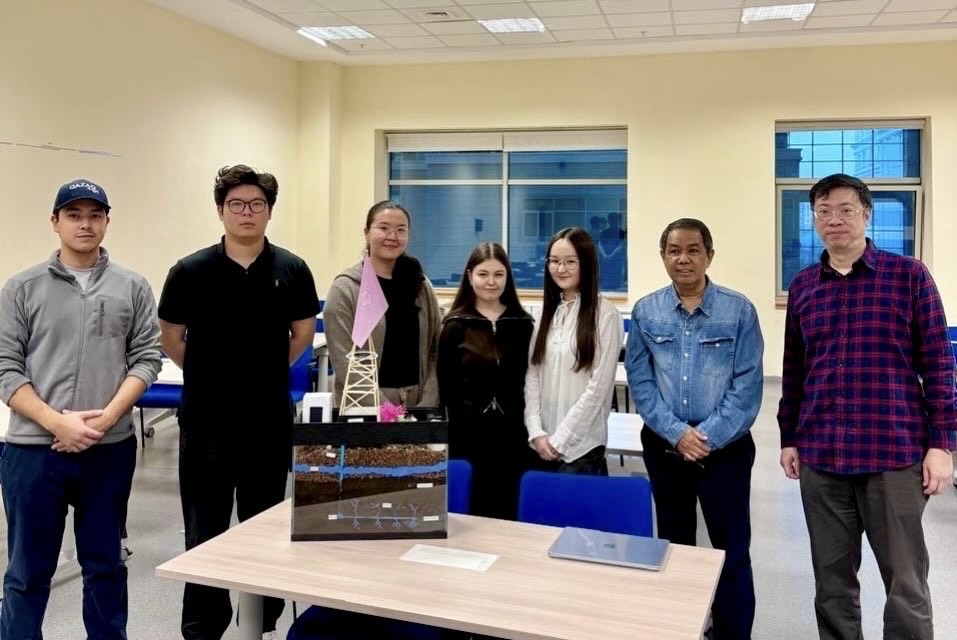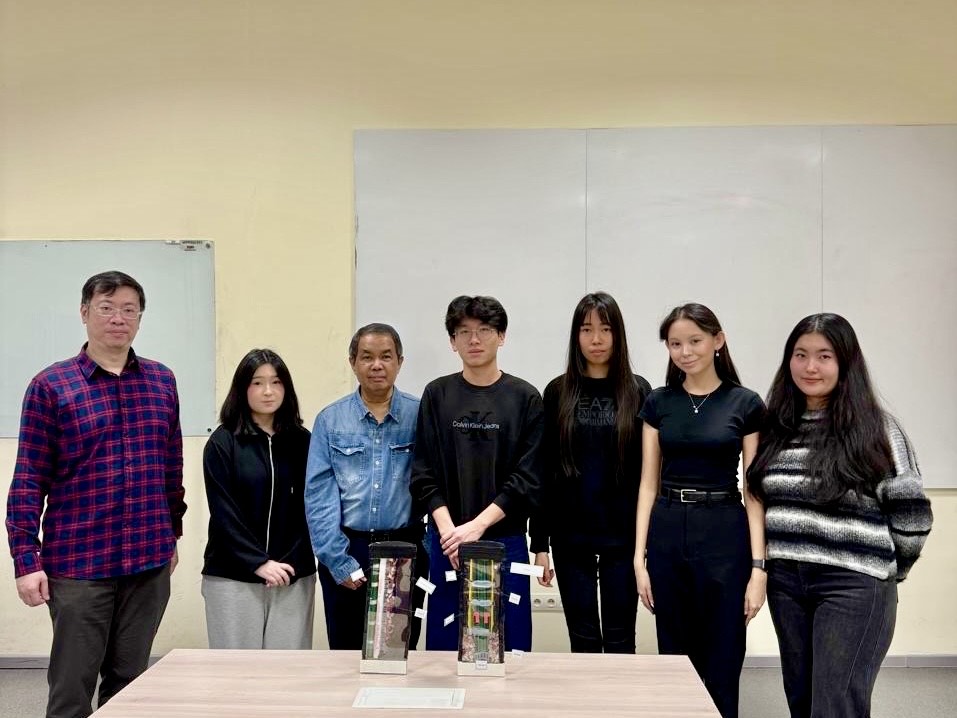
As part of the PETE304 Well Completion and Stimulation course, the School of Mining and Geosciences (SMG), Nazarbayev University, organized a Well Completion and Stimulation Design Competition led by Associate Professor Sonny Irawan. The semester-long group project was designed to help students apply theoretical knowledge to real-world well completion and stimulation challenges.
Five student groups developed detailed designs covering topics such as open hole, cased hole, and slotted liner completion, sand screen configurations, gravel pack systems, hydraulic fracturing models, and vertical and horizontal completion design. Each team was required to build a physical 3D model of the completion or stimulation system, submit a written design rationale, and deliver a group presentation.
🏆 First Place – Group 4
Topic: Sand Screen, Slotted Liner, and Gravel Pack Completion
Group 4 produced a highly detailed and technically accurate model showing the integration of sand-control technologies within the wellbore. Their project demonstrated correct layering, effective filtration mechanisms, and realistic completion sequences, supported by a clear and confident presentation.
🥈 Second Place – Group 3
Topic: Sand Screen Types
Topic: Sand Screen, Slotted Liner, and Gravel Pack Completion
Group 4 produced a highly detailed and technically accurate model showing the integration of sand-control technologies within the wellbore. Their project demonstrated correct layering, effective filtration mechanisms, and realistic completion sequences, supported by a clear and confident presentation.
🥈 Second Place – Group 3
Topic: Sand Screen Types
- Group 3 presented a strong comparative model of different sand screen types used in petroleum wells. The project clearly illustrated filtration principles, screen selection criteria, and reservoir-specific applications, earning them second place for technical accuracy and teamwork.
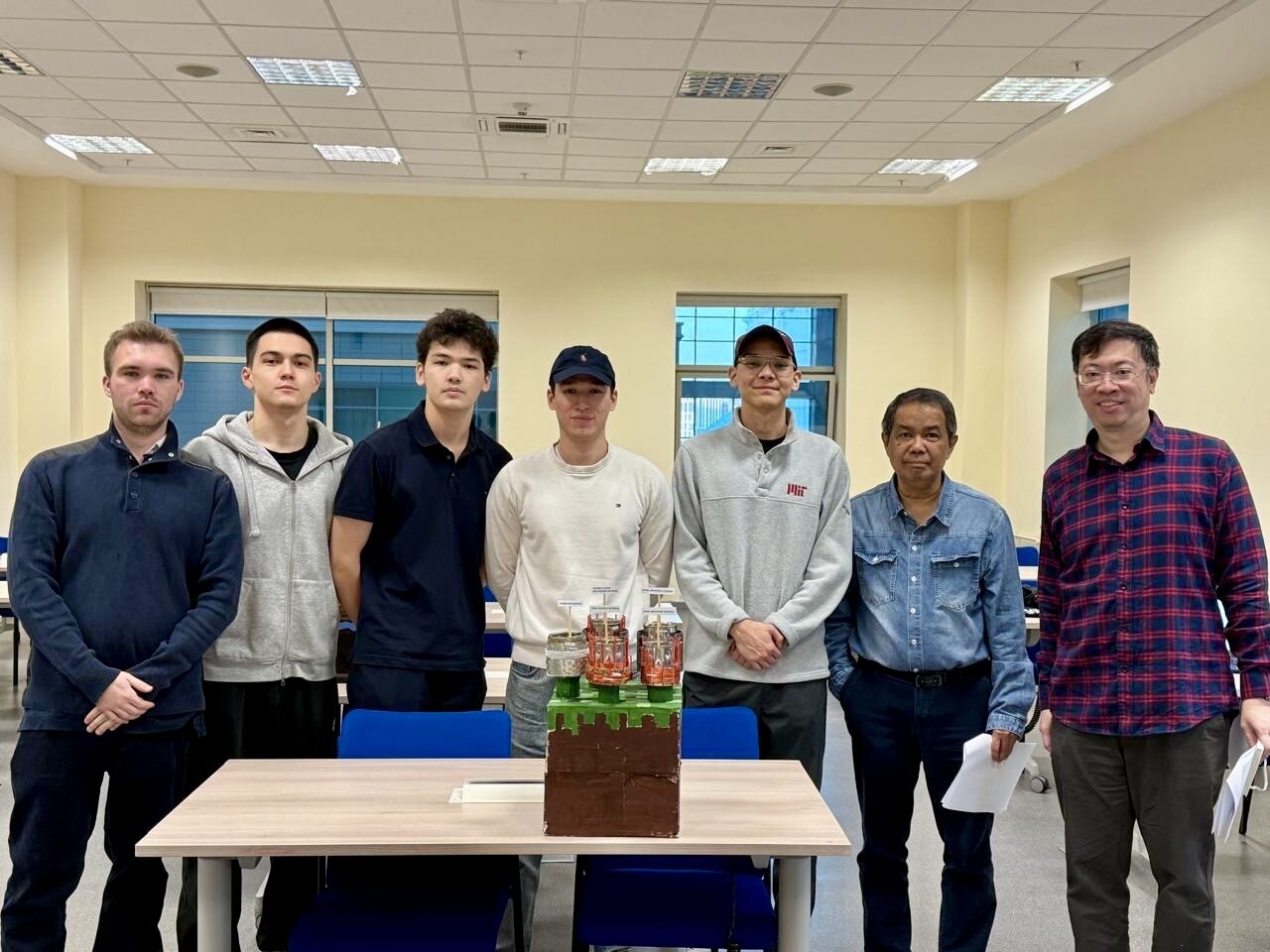
Other groups also delivered strong projects, including Group 1 – Open Hole, Cased Hole, and Slotted Liner Completion, Group 5 – Hydraulic Fracturing Model, and Group 6 – Vertical and Horizontal Completion Design, demonstrating the breadth of well completion and stimulation topics covered in the course.
To ensure objectivity and academic rigor, SMG invited Associate Professor Alfrendo Satyanaga, an expert in structural engineering from the Civil Engineering Department, as an external evaluator. His participation added an independent perspective on model integrity, realism, and presentation quality, while encouraging interdisciplinary thinking among students.
The competition is a key applied-learning component of PETE304, enabling students to translate classroom concepts into physical representations, understand the interaction of completion equipment under real-field conditions, and strengthen their communication, teamwork, and problem-solving skills. The outcomes of this project underscore SMG’s commitment to hands-on, industry-relevant petroleum engineering education.
The competition is a key applied-learning component of PETE304, enabling students to translate classroom concepts into physical representations, understand the interaction of completion equipment under real-field conditions, and strengthen their communication, teamwork, and problem-solving skills. The outcomes of this project underscore SMG’s commitment to hands-on, industry-relevant petroleum engineering education.